


The U.S. 2 dollar bill is one of the country’s most unlike denominations and perhaps its most misunderstood. While not commonly circulated, the bill has an interesting back story with complex design elements and cultural significance that make it a popularly collected note and a lasting symbol of U.S. monetary heritage.
Origins of the Two-Dollar Bill
The two-dollar bill originated in 1862 as a denomination of United States Note (originally a coin note) and was called: United States Note. The bill bore a portrait of Alexander Hamilton, the first Secretary of the Treasury, at that time. This first edition was the origin of a series which would incorporate different motifs and key historical episodes.
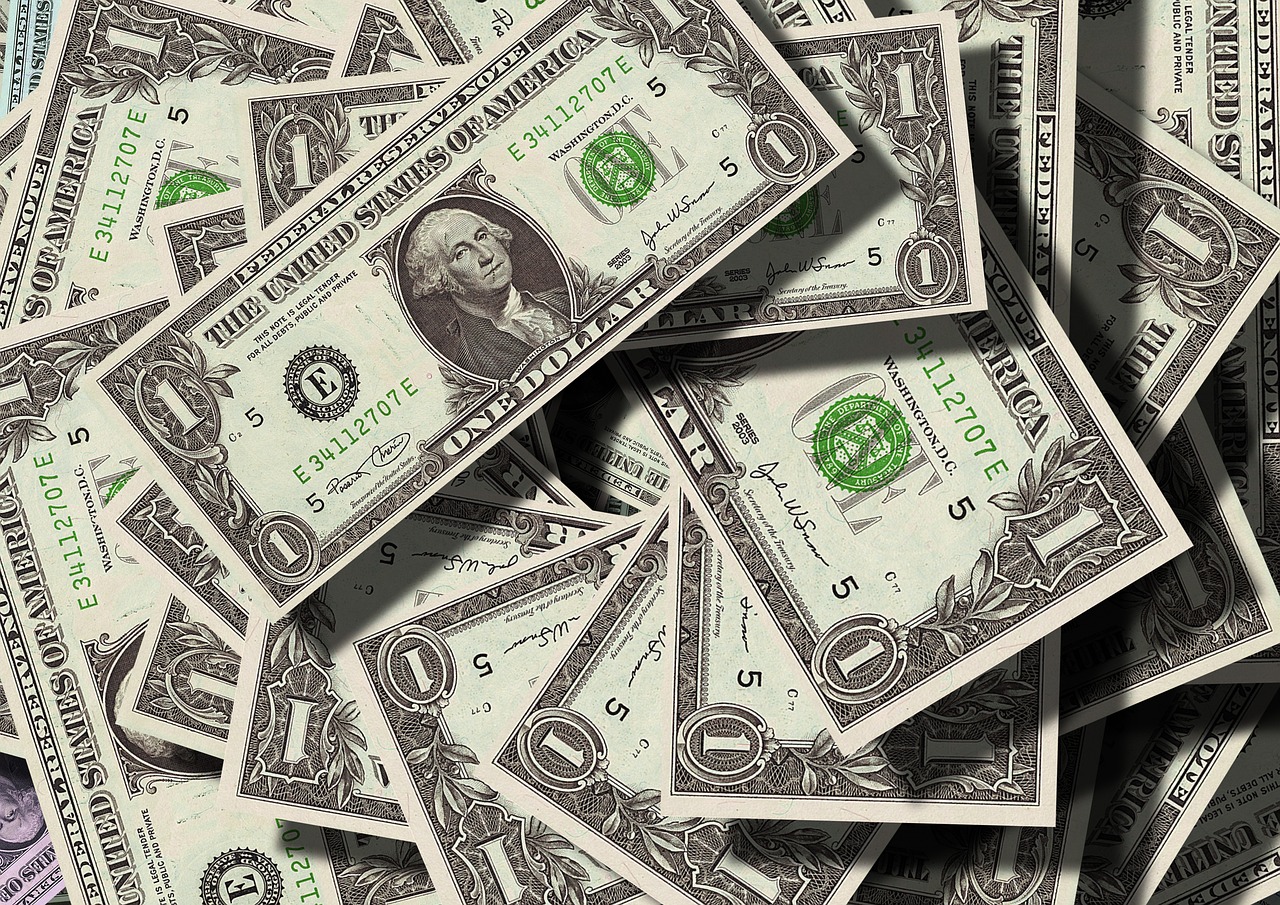
Eventually, in 1869, the likeness was modified to include third president Thomas Jefferson (who is best known as the writer of the Declaration of Independence). And to this day, Jefferson’s portrait remains the main image on the two-dollar bill.
Evolution of Design
In the decades since, the two-dollar bill’s design has evolved in several notable ways:
1862–1869: The Early Designs
- Hamilton appeared on the first bill, Jefferson in 1869.
- Red or green seals were a characteristic of the earliest issues.
1928 Series
- It was later trimmed down to fit the contemporary size of U.S. dollar bills.
- On the back was Jefferson’s Monticello, his home in Virginia.
1976 Bicentennial Redesign
- In honor of the Bicentennial of the United States, for its reverse the note was modified to feature John Trumbull’s painting Declaration of Independence.
- This is the current design, representing America’s founding principles.
Design Elements of the Modern Two-Dollar Note
The updated two-dollar bill features several significant details:
Obverse (Front):
- Portrait of Thomas Jefferson.
- Treasury seal and Federal Reserve markings.
- Unique serial numbers for authentication.
Reverse (Back):
- Features An Elaborate Print Of The Declaration Of Independence After Trumbull’s Painting.
- The picture features 42 of the 56 Declaration signers and some were left out due to space constraints.
Circulation and Rarity
The two-dollar bill remains the only U.S. currency still issued by any US governmental agency that is not the Department of Treasury or one of its sub-agencies (such as the BEP). There are common misconceptions that the bill is no longer in circulation, or was not minted in a certain year, but it is still legal tender.
Causes for (some of the) scarcity in common use are:
- Low demand from the public.
- Banking habits, which few companies ask for.
- Collector interest, causing people to hoard the bill rather than use it.
The Federal Reserve indicates that there are hundreds of millions of $2 bills out in the world by 2025, but few ever hit your wallet throughout everyday commerce.
Cultural Significance and Superstitions
The two-dollar bill has also inspired many cultural references and superstitions:
- The bill is considered lucky in some circles and is regularly kept as a good luck charm in wallets.
- Others, on the contrary, link it to misfortune~drawn from the fact that most people don’t use it and they think it is scarce.
- The bill has also been featured in politics, horse racing, and gambling as a novelty item due to its veiled status of being rare and unique.
Collectibility and Value
Although the majority of two-dollar bills are circulating at face value, some factors will make them very collectible:
- Earlier Series (Pre-1928): Older large-sized notes can be worth hundreds of dollars up to a few thousand.
- Star Notes: Notes with a star in the serial number are hard to find and valuable.
- Uncirculated Bills: “If they are like new,” uncirculated $2 bills from recent series tend to sell for more than their face value.
- Distinctive Serial Numbers: Serial numbers with a low number of digits, or unusual sequences can be worth more money.
Collectors and currency enthusiasts view the $2 bill as an easy, low-cost way to get into collecting U.S. money.
Printing and Production
Printing of the two dollar bill is by the Bureau of Engraving and Printing. Here are some key details of its production:
- Notes are printed in 32 to a sheet or 50 to a sheet.
- A variety of anti-counterfeiting measures are incorporated, but the $2 bill carries fewer security equipment features compared with other standard U.S. denominations (Most notably, like all circulating United States currency, it is printed on a special paper that prevents counterfeiting).
- Every note is further subjected to rigorous checks before it reaches transaction.
Misconceptions About the Two-Dollar Bill
There are a few myths that continue to betray the two-dollar bill:
-
“The $2 bill is no longer in circulation.”
– False. The bill is still issued, though in small numbers. -
“It is extremely rare and valuable.”
– False. Most bills are only worth $2 unless they are older or special editions. -
“Businesses cannot accept it.”
– False. It is legal tender and must be accepted for all debts, public and private.
- “The $2 bill is no longer in use.”
Todays use of the 2 dollar bill
Though it sees little use in transactions thanks to a long-term decline in its purchasing power, the $2 bill does have some utility as we shall soon see:
- Casinos and Racetracks: Used often because of its link to gambling.
- Souvenirs & Gifts: Offered as mementos or novelty items.
- Military and Overseas Use: U.S. embassies and military installations have used $2 bills to show off the variety of American currency.
People Also Ask
What is the meaning of a $2 bill?
Rare, unique and sometimes lucky A $2 bill represents the same qualities many of us hope to have in our lives: rare, unique and “lucky.” It is not widely passed around, so many regard it as a special souvenir or mark of wealth.
What is the value of a $2 bill today?
Most of today’s $2 bills are indeed worth only 2 bucks. Again however, older series, star notes and uncirculated bills from the year can be worth much more – anywhere between $20 for a bill in great condition and several thousand dollars if it’s rare enough.
Do 2 bills bring good luck or bad luck?
According to the culture, two dollar bills are lucky and held in wallets. But in few traditions they are unlucky as it circulate rarely.
Are $2 bills rare?
From a technical standpoint, they are not rare; millions remain in circulation. Yet, they are hardly seen in ordinary courses of transaction; and for that reason appear to be scarce.
Conclusion
The $2 bill is one of the most interesting notes in American currency. As a symbol of American identity and values, our currency is the paper embodiment of who we are as a nation.People use coins for all sorts of things; some people put money in piggy banks or other containers to save one coin at a time.
