
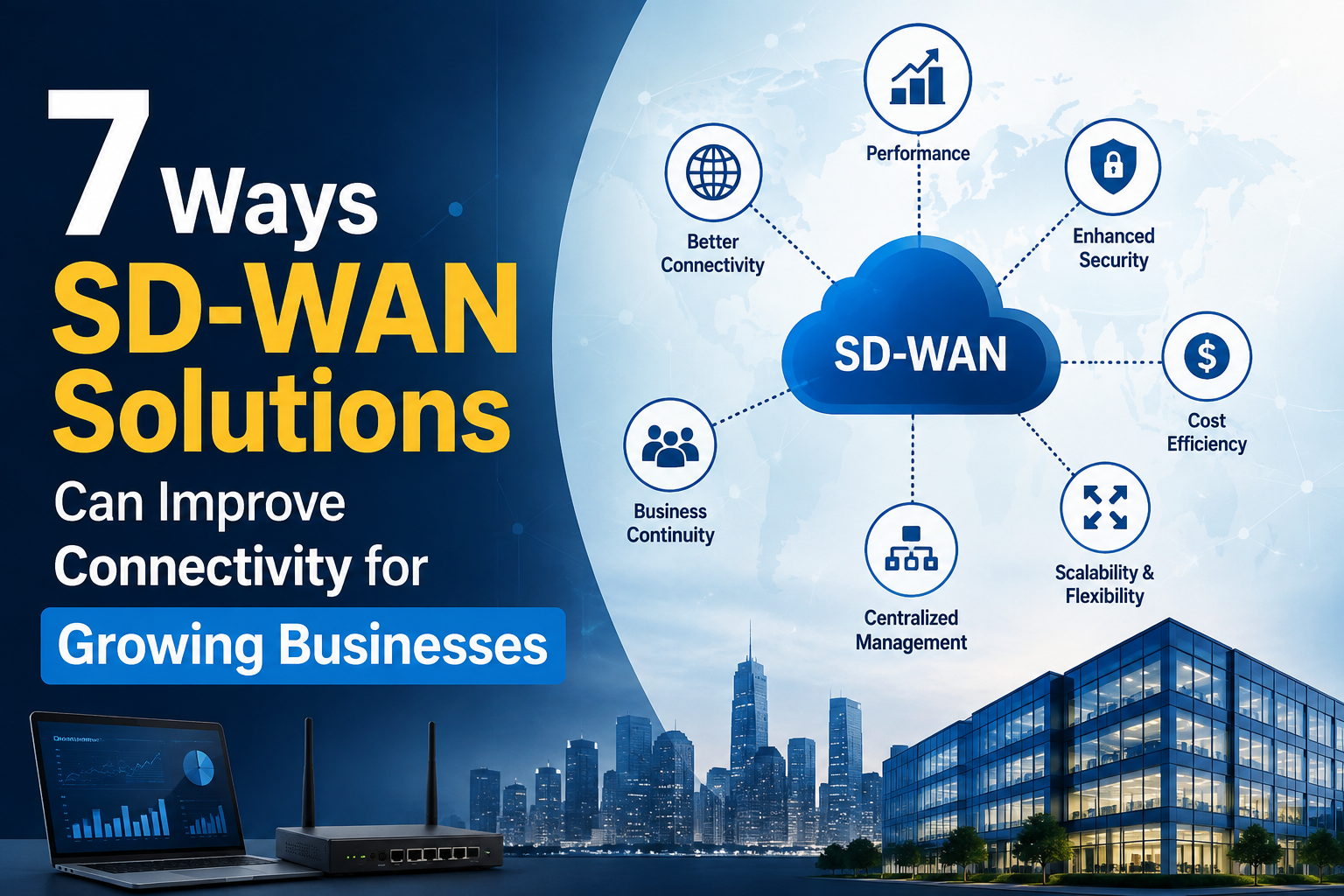

Growth exposes weak network design faster than almost anything else. A business can add branches, SaaS tools, cloud workloads, contractors, mobile users, and new compliance duties in a year. However, the WAN underneath often still behaves like it was built for one data center and a handful of predictable routes.
That gap isn’t only a networking problem. It becomes a security problem, then an operations problem, then a board-level risk.
The role of AI in cybersecurity matters here because modern connectivity decisions now sit next to detection, telemetry, policy automation, and faster response. If the network can’t see what’s happening, the SOC is already late.
Ransomware appeared in 44% of breaches analyzed in Verizon’s 2025 DBIR, which makes connectivity a resilience issue, not just a bandwidth issue. A financial services firm moving loan apps to the cloud needs predictable routing, segmentation, failover, and security controls that follow the traffic.
It needs predictable application paths, cleaner segmentation, better failover, and security controls that don’t fall apart when traffic stops hairpinning through headquarters.
Why SD-WAN Becomes a Connectivity Control Point, Not Just a Routing Upgrade
Traditional WAN design made sense when most important apps lived in a central facility. Branch traffic came back to the data center. A security inspection happened there. Performance complaints were annoying, but at least the architecture was easy to explain.
That model feels brittle now.
SD-WAN changes the control point. Instead of treating every circuit and application the same way, it can steer traffic based on business policy, link health, application type, user context, and security posture. Here’s how SD-WAN actually works.
Several leading vendors have Secure SD-WAN by combining networking and security management through a shared operating system and console, which reflects where the market has been heading: fewer isolated boxes, fewer policy gaps, and less manual stitching between teams.
For teams reviewing the foundations of SD-WAN solutions, the real question isn’t “Can it replace MPLS?” That’s too narrow. The better question is: can it keep the business connected when growth makes the old network noisy, expensive, and harder to defend?
1. It Gives Branches More Than One Way Out
Single-path connectivity is quiet until it fails. Then everyone knows.
SD-WAN lets a branch use multiple transports, such as broadband, private links, LTE, or 5G, and choose the best available path for each application. That matters for retail, healthcare, logistics, manufacturing, and any company where downtime at the edge becomes lost revenue very quickly.
The practical move is simple: don’t design failover only for circuit loss. Test brownouts too. Packet loss, jitter, and ISP routing weirdness often hurt users before a link fully drops.
Ask during planning:
- Which applications deserve automatic path switching?
- What level of degradation should trigger a move?
- Who gets alerted when the “backup” path becomes the normal path for three days?
That last one gets missed. A lot.
2. It Makes Cloud Access Less Painful
Backhauling cloud traffic through a central data center can turn a normal SaaS session into a slow-motion ticket generator. Users blame the app. The app owner blames the network. The network team points to bandwidth charts that look fine.
SD-WAN can send trusted SaaS and cloud traffic directly to the internet from the branch, while still applying security policy. Done carelessly, direct internet access creates exposure. Done well, it cuts latency without making the branch a soft target.
This is where network and security teams need to stop working from separate spreadsheets. Application owners should map critical workflows, the security team should define inspection and access rules, and the network team should set routing behavior around measurable app experience.
For finance teams tracking technology spend, operational risk discussions often start with the same question: what breaks when growth outruns controls?
3. It Helps Keep Voice, Video, and Core Apps Usable
Not all traffic is equal. Payroll uploads can wait a few seconds. A customer support call can’t. A payment authorization timeout can create a messy queue at the counter.
SD-WAN can identify application classes and apply quality rules that protect sensitive traffic from noisy transfers or recreational browsing. The trick is discipline. If every app becomes “business critical,” the policy table becomes fiction.
Here’s a blunt test: if an app slows down for ten minutes, does the company lose money, violate an SLA, miss a patient-care window, or create customer-facing harm? If yes, prioritize it. If no, put it lower.
This isn’t glamorous work. It saves mornings.
4. It Reduces the Cost Shock of Opening New Sites
Growing companies don’t always have the luxury of twelve-month network planning cycles. A new clinic, warehouse, branch office, or acquisition site may need to be live fast, sometimes with whatever local connectivity is available.
SD-WAN can make that less chaotic by abstracting policy from the physical circuit. The team can ship a device, apply a standard configuration, bring the site online, and tune paths after the fact.
But standard doesn’t mean carelessness. Build a site-launch checklist:
- Identity and admin access reviewed
- Default routes tested
- Local breakout rules approved
- logging confirmed
- Failover tested during business hours and after hours
- Rollback contacts documented
That checklist sounds basic until an acquisition cutover happens on a Friday evening.
5. It Gives the SOC Cleaner Context
Security teams don’t need more alerts. They need better context.
SD-WAN telemetry can help correlate user, application, location, link behavior, and policy decisions. When a branch suddenly sends unusual traffic to a new destination, or when a normally quiet system starts behaving like a staging box, network context can shorten the investigation.
This is also where the role of AI in cybersecurity becomes more practical and less buzz-heavy. AI-assisted triage can help group noisy events, spot patterns, and reduce analyst fatigue, but it still depends on trustworthy data.
CISA has published guidance on AI security and the need to manage AI-related risk across critical infrastructure and cyber operations. CISA AI guidance: Bad telemetry in, shaky decisions out.
So the network has to feed the security stack, not sit beside it like a separate machine.
6. It Makes Segmentation Easier to Apply Across Growth
Segmentation often looks good on paper and weak in production. New sites get exceptions. Acquired networks stay flat “temporarily.” Contractors receive broad access because nobody has time to untangle the workflow.
SD-WAN can help apply consistent segmentation across locations, users, and applications. A warehouse scanner doesn’t need the same access as a finance laptop. Guest Wi-Fi shouldn’t share trust with back-office systems. OT traffic shouldn’t casually mix with general corporate browsing.
There’s a real argument for keeping some designs simple, though. Over-segmentation can break operations and create bypass habits. Start with the zones that reduce blast radius the most: identity systems, payment environments, administrative access, backups, and high-value data stores.
7. It Gives Leaders Better Tradeoff Data
Budget meetings get sharper when the network team can show facts instead of feelings.
SD-WAN reporting can show circuit quality, application performance, path usage, downtime patterns, and policy hits. That helps leaders decide whether to renew a private link, add broadband, move a workload closer to users, or retire an expensive connection that no longer earns its keep.
The best reports don’t drown people in charts. They answer business questions:
- Which sites are most fragile?
- Which apps cause the most user pain?
- Which circuits cost too much for the value they provide?
- Which policies are being bypassed?
- Where would a local outage hurt revenue or safety first?
That’s the level where network architecture becomes risk management.
Get a Better Operation Model for Connectivity
SD-WAN won’t fix poor governance, weak identity hygiene, or a security team buried under alerts. It can, however, give growing businesses a better operating model for connectivity: smarter paths, faster branch rollout, stronger segmentation, clearer cloud access, and more useful telemetry for incident response.
That matters because business growth rarely waits for the network to be redesigned politely. New sites arrive. Apps move. Attackers probe edge systems. Regulators ask harder questions. The role of AI in cybersecurity will keep expanding, but AI can’t compensate for a network that lacks visibility, policy discipline, and resilience.
The real win isn’t a prettier WAN diagram. It’s fewer blind spots when something breaks, less guesswork when traffic behaves strangely, and better choices when the next growth plan lands on the CIO’s desk.