
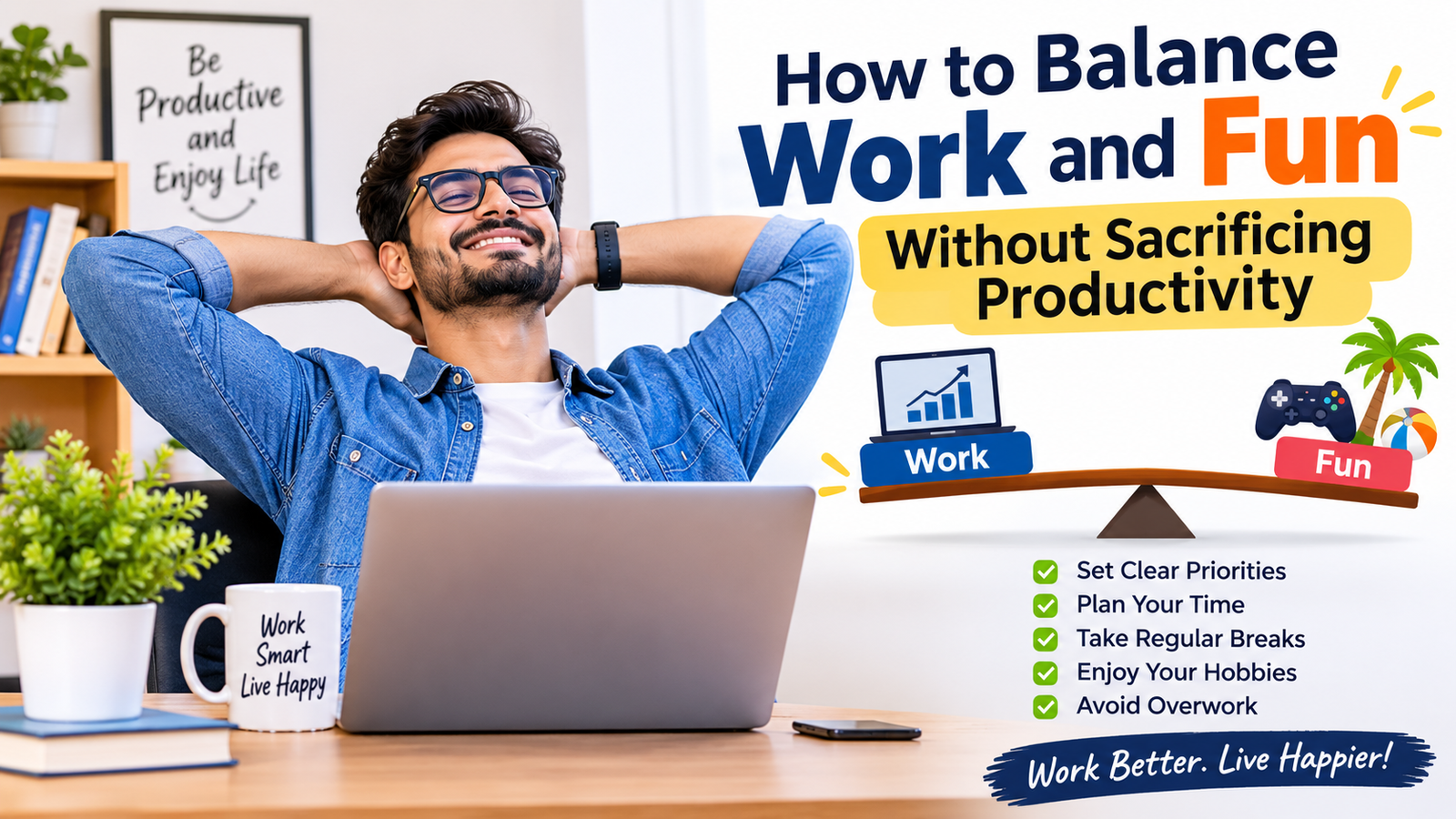

Balancing work and fun can feel like an impossible challenge, especially when your to-do list seems to never end. Between tight deadlines and everyday responsibilities, finding time to relax or enjoy your favorite activities often feels like a luxury.
However, constantly working without making time for yourself can lead to stress and exhaustion. It may even affect your motivation over time. Being productive doesn’t mean staying busy every waking hour. What matters more is how effectively you manage your responsibilities while making room for activities that bring you happiness.
The good news is that professional success and personal enjoyment don’t have to compete. A few thoughtful adjustments to your daily routine can help you experience both.
1. Set Clear Priorities and Focus on What Matters
Better balance starts with understanding which responsibilities deserve your attention. Rather than beginning each morning with an overwhelming to-do list, identify three important tasks you want to accomplish. This gives your day a clear direction and prevents less urgent responsibilities from taking up too much time.
It also helps to consider when you do your work best. If your concentration is strongest in the morning, dedicate those hours to demanding projects. Save routine administrative tasks for later, when your energy may naturally decline.
2. Schedule Fun and Leisure Activities in Advance
Once you’ve established your work priorities, it’s equally important to make room for activities you enjoy. Instead of treating leisure as something you’ll enjoy only after completing every responsibility, give it a dedicated place in your schedule.
For instance, you might spend an evening watching a movie or playing casino games online. Those interested in familiar gameplay could explore Pinoy casino games, which may feature digital versions of traditional local fairground games. Platforms like Solaire provide a variety of simple yet exciting titles straight from your smartphone or computer, so you can play local favorites without having to visit a physical casino. You could also reserve certain evenings for catching up with friends, especially if social commitments often get overlooked during busy weeks.
Planning these activities ahead of time makes them easier to enjoy without feeling that you’re taking time away from work.
3. Practice Time Management With Focused Work Sessions
With time reserved for responsibilities and personal interests, the next challenge is making your working hours count. Fortunately, time-blocking can help you stay organized by assigning specific periods to individual tasks.
Another option is the Pomodoro Technique, which encourages focused work followed by short breaks. It involves working on a single task for 25 minutes, followed by a five-minute break. Then, after completing four work sessions, take a longer break of 15 to 30 minutes. This approach helps you maintain focus while giving your mind regular opportunities to recharge, allowing you to stay productive without feeling overwhelmed.
4. Establish Healthy Boundaries Between Work and Personal Life
No matter how effectively you manage your time during the day, it won’t help much if professional responsibilities continue spilling into your evenings. This is why establishing boundaries matters, particularly when you work remotely or have a flexible schedule.
Start with a realistic workday and try to maintain consistent finishing hours. Once you’ve completed your responsibilities, avoid checking work-related notifications unless something genuinely requires immediate attention.
Your physical environment can also influence how easily you disconnect. If you work from home, having a dedicated workspace can help separate professional tasks from personal activities. Additionally, consider ending your day with a simple routine, such as reviewing tomorrow’s priorities before closing your laptop. This creates a natural transition from work to leisure.
5. Make Everyday Work More Enjoyable
Although separating work from personal time is important, that doesn’t mean your working hours have to feel unpleasant.
Small adjustments to your environment can make everyday responsibilities more enjoyable. You might listen to background music while handling repetitive tasks, provided it doesn’t interfere with your concentration.
Another approach is to recognize your progress throughout the day. Instead of waiting until a major project is finished, acknowledge smaller milestones as you complete them. For example, taking a coffee break after completing a challenging assignment can give you something to look forward to. These moments of enjoyment can make your routine feel more manageable and help you maintain your motivation throughout the workday.
6. Prioritize Rest, Sleep, and Physical Well-Being
While productivity strategies can help you manage your schedule, they become less effective when you’re constantly running low on energy.
Poor sleep and ongoing exhaustion can make even simple responsibilities feel overwhelming. As a result, you may struggle to concentrate at work and have little enthusiasm left for personal activities. As such, getting sufficient sleep is an important starting point for achieving work-life balance. Regular movement can also support your well-being, even if it’s something as simple as taking a walk after work.
Make Room for a Life You Actually Enjoy
A fulfilling life shouldn’t revolve entirely around what you accomplish at work. It should also leave space for the experiences that make your efforts worthwhile.
Your ideal balance may look different from someone else’s, and it can also change as your priorities evolve. What matters is finding a rhythm that allows you to pursue your ambitions without putting your personal happiness on hold.
Success feels more rewarding when you have the time and freedom to enjoy it.