
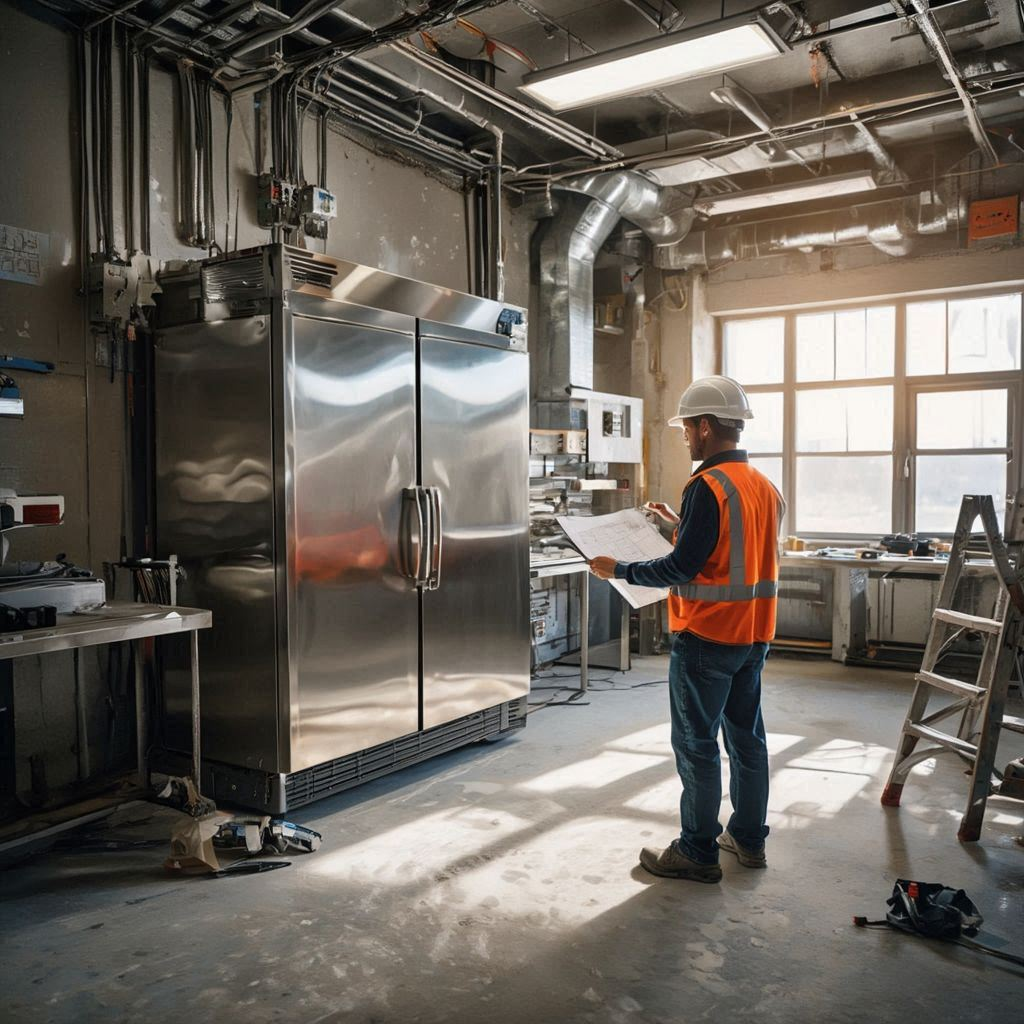

Cold storage is not a line item you guess on. It is one of the biggest financial decisions in your build-out, and if you underestimate it, you will feel it in your food cost, cash flow, and stress level from day one.
If you are opening your first restaurant, here is the step-by-step way to budget cold storage like someone who plans to stay in business.
Start With Total Startup Numbers Before You Zoom In
Before pricing a single cooler, know your full startup range. According to data from Vanta Insights, kitchen equipment alone can run between $40,000 and $150,000 depending on concept and size.
That matters to you because cold storage is often 10 to 25 percent of that equipment budget. If you are planning a $100,000 equipment package, you may be looking at $10,000 to $25,000 just for refrigeration.
Lock in your total equipment budget first. Then allocate your cold storage slice intentionally instead of emotionally.
Price Equipment The Right Way The First Time
There is a big difference between a reach-in fridge from a big box store and commercial-grade cold storage built for daily abuse. Restaurants open doors hundreds of times per shift, and temperature swings destroy cheap equipment.
When you are comparing walk-in refrigerators and freezers for restaurants, focus on three variables:
- Cubic footage based on projected weekly inventory
- Compressor location and ventilation requirements
- Insulation thickness and door hardware durability
Walk-ins make sense when your weekly food orders exceed what reach-ins can safely hold. They give you tighter temperature control, better organization, and room to grow without stacking products unsafely.
A properly sized walk-in also protects your prime cost. Spoiled product, over-ordering due to lack of space visibility, and emergency replacements are far more expensive than buying the right unit up front.
Purchase Price Ranges
Basic prefabricated walk-in coolers often start around the low five figures. Larger freezer rooms with heavier-duty compressors and floor systems can move well beyond that.
Do not forget freight and delivery. Oversized panels and compressors can add thousands if your site has limited access.
Budget Installation And Electrical Like A Pro
Cold storage is not plug-and-play. It ties into electrical panels, sometimes plumbing, and often structural floor prep.
A 2025 commercial kitchen cost guide from Dad Improvement shows plumbing and electrical installation commonly ranging from $5,000 to $20,000 for full kitchens. Your cold storage portion depends on amperage, distance from the panel, and whether upgrades are required.
Here is what to account for:
- Dedicated circuits and panel capacity
- Floor leveling or reinforced slab for freezer loads
- Condensate drains and moisture control
- Refrigeration line runs and ventilation
If your building needs a panel upgrade, your refrigeration budget just changed. Get an electrician involved early, not after you sign equipment contracts.
Model Energy Costs Before They Surprise You
Cold storage runs 24 hours a day. It never takes a break, and neither does your utility bill.
Research from H2 Products shows energy in many restaurants now accounts for 5 to 7 percent of revenue. For a restaurant doing $200,000 annually, that is $10,000 to $14,000 in energy.
Refrigeration is a major slice of that. If you oversize equipment or ignore energy-efficiency ratings, you commit to higher monthly fixed costs for years.
Look at:
- Energy-efficient compressors
- LED lighting inside units
- High-quality gaskets and door seals
- Automatic defrost controls
Saving 10 percent on energy each month adds up quickly. Over five years, that difference can fund other capital upgrades.
Protect The Investment With Monitoring And Maintenance
One refrigeration failure can wipe out a week of profit. Lost inventory, emergency repair calls, and possible health code issues stack up fast.
Facility data highlighted by ServiceChannel’s 2025 Restaurant Benchmark Report emphasizes how costly refrigeration breakdowns can be across restaurant portfolios. That is not a big-chain problem only. It hits independents even harder.
Build these into your budget from day one:
- Preventive maintenance contracts
- Temperature monitoring sensors with alerts
- Emergency repair reserve
A few hundred dollars a month for monitoring is small compared to a $5,000 inventory loss overnight.
Plan Cash Flow Timing Not Just Total Cost
New operators obsess over total cost and forget timing. Deposits, progress payments, and final installation balances rarely hit at the same time as your revenue.
Create a timeline that includes:
- Equipment deposit at order
- Balance due before shipment
- Installation labor payments
- First utility bills after activation
If your walk-in arrives two weeks before opening, you are paying for power before revenue starts. That needs to be in your cash flow model.
Financing Versus Cash And Depreciation Strategy
Paying cash reduces long-term cost but tightens early liquidity. Financing preserves cash but increases total expense through interest.
Equipment loan rates vary widely based on credit and experience. Shorter terms mean higher monthly payments but less interest overall. Longer terms improve early cash flow but extend your fixed obligations.
From an accounting perspective, refrigeration equipment is depreciable. Work with your CPA to understand how accelerated depreciation or Section 179 expensing affects your tax position. That strategy can shift how much cash you are comfortable deploying up front.
The key is alignment. Your financing structure should match your projected cash flow, not just your optimism.
Build A Contingency Reserve For Downtime
Every operator believes their equipment will run perfectly. That belief does not survive the first compressor failure.
Set aside a contingency reserve equal to at least one significant repair event plus lost inventory. For many small operators, that may mean $5,000 to $10,000 sitting untouched.
It is not pessimistic. It is disciplined.
Cold Storage Budgeting That Supports Profit
Planning cold storage for a new restaurant helps to protect your margins and long term stability. Equipment cost, installation, energy use, maintenance, and financing all influence prime cost and break even targets.
When you budget refrigeration with discipline, you create flexibility, choose the right walk-in refrigerators and freezers for restaurants, and build systems that support steady, profitable growth over time and operational resilience.
